Mission, Position and the Customer Journey

30-Second Marketing for Consultants Part 2

Chris said, “So 30-Second Marketing has four parts: Hook ’em, Hold ‘em, Pitch ‘em and Close ‘em.

Y’all can take that to the bank, youngster,” drawled Rob. “And when a Georgia Boy lays that on you it is certain true, no doubt.”

Pathway to purchase“The problem,” said Chris is I’m not really clear on how it is different from a Mission or a Position.”

“Foah starters it’s got more movin parts. It’s like the difference ‘tween flinging a beastie into the briar patch and roundin’ up the hounds to go huntin come sunset.”

Rick asked, “Fletch, since you originated 30-Second Marketing (See Part 1) would you please translate what the southern fried branding Buddha just scrambled?”

Mission versus Position versus 30-second Marketing

“Sure,” I replied. “A Mission is for all the folks that need to trust a firm, product or service. A Position is a way to quickly tell suspects, prospects, customers and clients why they should put you first. Usually those will be words in print and there is no opportunity for interaction.

30-Second marketing is about a conversation rather than one of those brief summaries intended to make you memorable in as few words as possible. It encourages interaction.”

Gail, the copywriter and editor in our midst, piped up, “30-Second Marketing is a conversation, not a commercial. You need to invest significantly more time and imagination in crafting your answers than you might think.”

The Path to Purchase (Customer Journey)

Rob’s honey-warm voice slid in. He said, “My friend Gail is tryin’ to sugar coat the fact that it will take a good bit o’ skull sweat to get it right. Moah importantly, you need to get to know your prospect real well. You need to know where he or she is on the Path to Purchase and what is important to ‘em at that point. Don’t matter if it is one person, a couple or a committee, you got to get inside their heads.”

Gail said, “I like that description Bubba. Usually it’s what people call the Customer Journey but Path to Purchase is a lot more direct way to put it. And from my experience I believe that would be easier for folks that aren’t communications pros to understand.”

“I agree,” I said. It took me quite a bit of time to explain the customer journey to some clients the other day. And even when they got it there was difficulty in getting to the level of detail that can influence buying decisions. Something as simple as knowing that a new company was formed by execs from the leading company in the field can make  huge difference. Sometimes, the simple revelation of how you access one of the features of a product can close the sale.

The Takeaways:

Mission and Position are print reminders to make you, your product or service memorable.

The Path to Purchase is the steps your customer/client goes through in order to make the decision to buy.

The more intimately you understand the Path to Purchase the more compelling you can be in every phase of the sale…including 30-Second Marketing.


Jerry Fletcher’s blog recaps conversations with clients, prospects and the unruly mob of business development professionals he consorts with. They discuss marketing that works from solopreneur to enterprise level. Jerry, The Consultant’s Communication Consultant, is the ringleader and “Watson” of the dialogue. Sign up for the blog and other publications at: www.JerryFletcher.com/Profit.html

Jerry has been researching and implementing small business marketing that builds businesses, careers and lives of joy for 25 years as President of Z-axis Marketing, Inc. Learn more at www.JerryFletcher.com

Schedule a personal appearance. Jerry speaks internationally on Networking, Marketing and Contact Relationship Magic. www.NetworkingNinja.com


 

The Right Answer to the Most Common Question

30 Second Marketing Part 1

“It never fails. You walk into a place, say hello and within minutes you get the question,” I said. “It happens to every consultant, coach and professional, daily.”

Chris, our digital marketing director and the youngest member of the lunch bunch Singular most often asked questionblinked and asked, “What Question?”

Kate rolled her eyes, took a sip of iced tea and said, “It is THE Question. It is the simple request from someone to help identify you by the career path you are on. It is stock-in-trade for sales folks like me whenever we meet someone new.”

It is the single most asked question in the USA,” I said. “And most people trip all over themselves trying to answer it.”

Chris asked again, “So what is the question?”

Gail, our resident writer, put him out of his misery saying, “The question is: What do you do?”

Bubba, the branding Buddha, drawled with his usual southern charm, “Theahs just no way you can avoid it. Seems like folks kindly want to put you in a little box in their brain with a label stuck on it that fits their piddly memory.”

“You got that right,” I responded. “People always try to categorize new information and that means if you want to be remembered you need to do whatever you can to avoid what Bubba called, that piddly brain box.

An elevator speech is not the answer. That approach has come and gone.”

“But everybody says that you have to have an elevator speech if you’re going to be any good at networking,” said Chris.

“Everybody?” Asked Rick. “I don’t think so. The uninformed…maybe. The slow to understand the difference between how to market and how to sell…probably. Those that don’t understand the primary lessons of direct marketing, where I make a living…for sure. There are way too many people out there that just don’t get it.”

“A conversation instead of a commercial is the right answer,” Kate said. Most people will take interest in you and your profession if it is presented in an interesting way. But if you fall into the trap of describing yourself in common terms you lose. For instance, which would you rather talk to, a guy who says I’m a cpa” or one that tells you, “They call me Captain Crunch.’ That’s what Fletch calls a hook.”

Chris turned to me and asked, “What’s a hook?”

I told him, “A hook is the opening gambit of 30 Second Marketing which is a formula that helps you get to that conversation you want to have to make yourself memorable and give the person you’re chatting with ways to explain your difference to your ideal prospects.

The 30-Second Marketing formula:

Hook ‘em     (Get their interest)

Hold ‘em      (Tell them the problem you solve for most clients)

Pitch ‘em     (Tell them how you solve it)

Close ‘em    (Persuade them to take the next step)

The problem most consultants have is that they know way too much about their area of expertise so they have difficulty sorting out simple terms that people understand which relate to the reason they are looking for a consultant or professional to help them.

For example:

I’m a mechanic                  versus          I make cars go

I’m an IT expert                 versus          I make computers do it your way

I’m a website developer     versus          I build web sites that make rain

The Takeaways:

Make your answer memorable by simplifying it and putting the parts of the formula in language just about everyone can understand.

Test it. Try it on people you don’t know including prospects and pay attention to what they say and do. Then revise based on remarks, reactions and responses.  

Avoid lip service—the kind of responses that friends and family give you that aren’t realistic but rather are intended to make you feel good.


Jerry Fletcher’s blog recaps conversations with clients, prospects and the unruly mob of business development professionals he consorts with. They discuss marketing that works from solopreneur to enterprise level. Jerry, The Consultant’s Communication Consultant, is the ringleader and “Watson” of the dialogue. Sign up for the blog and other publications at: www.JerryFletcher.com/Profit.html

Jerry has been researching and implementing small business marketing that builds businesses, careers and lives of joy for 25 years as President of Z-axis Marketing, Inc. Learn more at www.JerryFletcher.com

Schedule a personal appearance. Jerry speaks internationally on Networking, Marketing and Contact Relationship Magic. www.NetworkingNinja.com

 

Consultant Trust Floats

“Any of y’all have somebody contact you several years after you pitched ‘em and they turned you down?” asked Bubba, Georgia’s answer to branding’s high court.
Trust floats on the stream of time

Rob, even though we call him Bubba is sharp. When he asks a question like that in this group you know there’s something he is really curious about.

As the rest of our crew settled in I responded, “Why do you ask?”

It takes time to get to trust.

“I had lunch the other day with someone I knew had worked with other marketing and sales consultants.” Said Rob with only a hint of drawl. “I listened when he told me why he wanted to talk to me now after this many years. I pointed out that he had hired someone after we last talked and that fellow had exited stage left a few months later and that I knew at least two other consultants that he was familiar with that could and had given him good advice.”

Kate, took a sip of water and said, “So you asked him why me?”

“Precisely, Madam Sales,” said Rob. “George’s ansuh threw me. He started back when we’d met before.”

George, the prospect said, “Back then I couldn’t see any reason to have a branding consultant. I figured that a marketing consultant would handle that as part of his or her job. I assumed that branding was sort of an automatic thing…get the right logo and tag line and you’re done! I didn’t know what I didn’t know.”

Our direct marketing expert Rick observed, “This George sounds like a really bright guy and one that leaves his ego at the door. Seems like he’d be a good client.”

Prospect knowledge in your area of expertise leads to trust.

Thas probably true said Bubba but what I learned by listening to his whole story is why I brought it up today. The more I thought about it the more I kept comin’ back to how Fletch is always goin’ on about Trust being the be all and end all ‘specially for consultants. It ‘minded me of that Yankee fella Thoreau who said that “Time is the stream that I go a fishing in’ The way George described how he came back ‘round to me is just the same. It was a matter of time and his knowledge about marketing and communications growing.”

George said, “I quickly found out that my perceptions about branding were way out of line. I figured out that branding was a real problem for us but I still kept going to general  consultants to help me solve the problem. It didn’t work. One wanted to make me the spokesperson/hero of the organization. Another couldn’t comprehend that even though each of our divisions had to stand on its own sales results it is still one company.”

Rick pointed out, “So your prospect moved from someone that didn’t know what he didn’t know to figuring out what his company’s problem was and then started bangin’ around trying to find the expertise he needed to solve the problem.”

“Right,” said Bubba.

So how did he come to pick you?” asked Kate.

Prospects need time to understand why they should trust you.

“It‘s that fishin’ thing. I just keep my bobber in the water waitin’ for a tug on it. Meanwhile down there just like a fish risin” to the bait George was slowly but surely headin’ back my way. He started asking some of the folks he had confidence in who he should talk to ‘bout his problem. A number of them mentioned me. And then he saw me doing a presentation that he said showed him I was an expert. So he called me.”

Kate said, “And now all you have to do is help him get to know and like you.”

“I musta done that,” said Rob. “He asked me for a proposal.”

The Marketing Takeaway

Getting clients is all about trust. To get them to come to you, you must:

  • Stay consistent

  • Establish your expertise

  • Assure that others refer you

  • Be willing to educate if they want to learn

  • Get to know them

Jerry Fletcher’s blog recaps conversations with clients, prospects and the unruly mob of business development professionals he consorts with. They discuss marketing that works from solopreneur to enterprise level. Jerry, The Consultant’s Consultant, is the ringleader and “Watson” of the dialogue. Sign up for the blog and other publications at: www.JerryFletcher.com/Profit.html

Jerry has been researching and implementing small business marketing that builds businesses, careers and lives of joy for 25 years as President of Z-axis Marketing, Inc. Learn more at www.JerryFletcher.com

Schedule a personal appearance. Jerry speaks internationally on Networking, Marketing and Contact Relationship Magic. www.NetworkingNinja.com

Marketing Myths vs Math

“Today, I was answering one of those update phone calls to keep a free magazine coming and after the usual address and industry verification stuff the young man asked me whether I preferred the printed or digital version. Marketing Myth: Print is dead

I answered print and then asked him what most people wanted.

He told me print and before I asked said it was preferred about 4 to 1 regardless of the age of the respondent!”

“I can believe that,” said Rick who runs a world-class direct marketing firm. There is research from an ad agency, J Walter Thompson that says 8 of 10 Millennials prefer print because it makes them feel more connected.”

Kate pushed her dreads back over one ear and said, “That’s the Lion’s share of folks that sales people like me have to talk to in the B to B world. There is still a stack of industry magazines and newsletters on the desks of the offices I visit and I can’t tell you how often there is an open catalog there, too.”

Chris asked, “Do you see any post cards when you’re scanning offices? The reason I ask is that we’ve tested using postcards versus e-mail campaigns in my company and the post cards win going away. The call to action differential is as high as 5 to 1 and that causes a huge difference in the ROI regardless of the cost of mailing.”

Gail, our resident copywriter asked, “is that because of the relative lack of competitive mail? I understand it really dropped off over the years so now it gets more attention. A couple of my clients are starting to mail newsletters again and getting great results.”

“I know what you mean,” I said. One of my former clients had a pile of 9 by 12 envelopes sitting in a cupboard and decided to just try mailing for a couple of months. That was a year ago. They are still mailing because their clients keep them. I recognize that envelope and I look forward to getting it each month because of the great heads-up information on security and what Microsoft is doing.”

“Thas’ called branding ol’ son,” said Rob, our southern fried branding guru. “I’ll bet they are startin’ to put deals in that envelope, maybe printed on a different color of paper, to get you to look at them and dimes to donuts you’ve passed some along to clients or others.”

I bowed to him and said, “Guilty as charged.”

“Now let me put the pecans in the pie for all of you,” said Rob. Y’all ever get a mailer from Google offering a deal for starting up an advertising account? Think about that. One of the biggest digital operations on the planet is using mail to get your business. That tell you anything?”

Same way with catalogs. Kate is right about that. Somewhere around 12 billion catalogs mail every year. People are just more comfortable leafing through a catalog than trying to find an item on screen even if they order on line. Print builds brands and can be more efficient than digital.”

The Takeaway

The rumor of the death of printed materials is greatly exaggerated. Print is preferred for some purposes by about 80% of prospects. It is in many cases a stronger method of branding than digital activities. And always provides a more personal touch.


Jerry Fletcher’s blog recaps conversations with clients, prospects and the unruly mob of business development professionals he consorts with. They discuss marketing that works from solopreneur to enterprise level. Jerry Fletcher is the ringleader and “Watson” of the dialogue. Sign up for the blog and other publications at: www.JerryFletcher.com/Profit.html

Jerry has been researching and implementing small business marketing that builds businesses, careers and lives of joy for 25 years as President of Z-axis Marketing, Inc. Learn more at www.JerryFletcher.com

Schedule a personal appearance. Jerry speaks internationally on Networking, Marketing and Contact Relationship Magic. www.NetworkingNinja.com



Kick-ass Case History

“For starters,” I said to Nina, “don’t call it that.”

Kick-ass Case Histories in Video and Prin

Gail, the wordsmith in our midst agreed. She said, “I like your term Success Story a lot better.” (Video: How to get the data you need for a Kick-ass Case History https://youtu.be/UcvpMkBynYk)

“But, sometimes things aren’t successful,” said Chris. “In my digital retail marketing operation we often try things that just don’t work at all.”

“But that, young pup, is just findin’ out that you’re barkin’ up the wrong tree,” said Rob our southern fried Brand Guru. “Indeed,” he went on, “in my book that is a success.”(Get the PDF of the Kick-ass Case History form)

Rick raised his voice to be heard over a crash of dishes from the kitchen and said, “Most people think that a case history has to be only about what works but I’ve always found the most valuable experiences are the ones that teach you what doesn’t. Selling direct, like I do, has always been a laboratory. That’s why we test before putting up big bucks. What I’m trying to say is that keeping good solid info every time out of the chute is the only way to really know.”

“If you’re selling, like I do every day, the marketing and sales train wrecks are sometimes the best to convince a buyer,” said Kate. “Being able to give somebody hard data on an approach that didn’t work makes it a lot easier to get them to sign off on one that does. The other thing it does is it gives you a reason to walk away from a prospect if you know they are going to fail or to suggest a test that could make both you and them look good.”

Nina, our luncheon guest, looked around the table wide-eyed and said, “All I really wanted was to put some information on my website that tells people what I’ve been able to accomplish with my clients. It seems like there is a whole lot more to this than I thought. “

“You betcha, sweet pea,” drawled Rob. Most of us have been advising professionals and particularly consultants long enough to know that you need to look at keepin’ track of every engagement and assignment in a way that allows you to use all the information later.” (Video: How to present a Kick-ass Success Story in print) https://youtu.be/KM_lH2Eqrqo )

Kick-ass case history in print

All assignments and engagements,” I emphasized. Here’s a rough list of the ones I think you should keep track of:

  • Client Prospecting
  • Referral Approaches
  • Proposal based engagements
  • Assignments based on a retainer agreement
  • Projects awarded for previous experience
  • Engagements that require training or retraining of client staff
  • Situations that require you, the client or both to stretch

“So you’re saying to keep track of it whether it is business development, business as usual or business with a twist,” said Kate.

“Well put,” I responded. “Early on having a simple form that you fill out helps get you organized to do it. Later, you may pick and choose which of the jobs you take on to do a full write up on but it never hurts to have the information.” Kick Ass Case History Capture Form

Nina asked, “So what is on the form?” (PDF of form)

“All the usual client ID stuff, the kind of project, start and end date, situation, objective, starting data, ending data,” I said.

Rob said, “I like to keep a file with the form. You don’t want to forget any branding data that you might want when you report on it. That could be things like a logo or photos of the client and the client’s business or products. And if graphics are important it is a good idea to have before and after stuff.”

“Words, too,” added Gail. “When you change Mission or Position or Value Proposition it is a good idea to have both the before and after. Other word oriented items I like to include are testimonials. If I’m working with multiple levels than I try to get them from each. And I always like to get them to include the numeric changes in their statements.”

“Don’t overlook video,” said Chris. “If you can get a video that demonstrates what you do or just the client talking about what you’ve done for them you have a winner. What our studies show is that video seems to be the most convincing way to get a point across these days. “Video: One way to do a Kick-ass Video Success Story https://youtu.be/KPCU79FgXvE) Kick-ass video case history still

Kate looked over her glasses at Nina and said, “All that hard data is good. But remember we’re dealing with human beings here. There is a great deal of emotion wrapped up in what we do. Change isn’t easy. Transformation is what we are really doing. People are scared of it. They shy away from it. And then when the work we do kicks in they become proud of it. Don’t forget to capture that emotional content and the newfound strength you help provide. “

“You keep a file like that and you’ll be able to build a powerful Success Story  to publish on the ones that work. You keep the data on the ones that don’t and make that into a Case History by adding one thing: your investigations in to why the anticipated results didn’t happen.”

The Takeaway

To build a Kick-ass Success Story you need to capture the information on every major project or engagement or assignment. Keep a file that doesn’t rely on memory to help you gather the data and materials you need. Then express it in a way that lets people “get it” in whatever medium you are using to present it .

Jerry Fletcher’s blog recaps conversations with clients, prospects and the unruly mob of business development professionals he consorts with. They discuss marketing that works from solopreneur to enterprise level. Jerry Fletcher is the ringleader and “Watson” of the dialogue. Sign up for the blog and other publications at: www.JerryFletcher.com/Profit.html

Jerry has been researching and implementing small business marketing that builds businesses, careers and lives of joy for 25 years as President of Z-axis Marketing, Inc. Learn more at www.JerryFletcher.com

Schedule a personal appearance. Jerry speaks internationally on Networking, Marketing and Contact Relationship Magic. www.NetworkingNinja.com

Butterflies Have No Choice

Ben, a friend as well as a client said it over lunch, “Butterflies don’t have a choice.”

Butterflies have no choiceWe’d been talking about visualizing and positioning a non-profit he’s working with. The intent of the organization is to provide the necessary elements for a metamorphosis of the members.

All of us in the lunch bunch agreed that the word metamorphosis was a little too sophisticated for marketing purposes and as we talked we kept coming back to different interpretations of Ben’s statement.

Gail, our copywriter who has edited several non-fiction books said, “He’s right. The butterfly is the end result of a metamorphosis. It starts out as a caterpillar with a voracious appetite than wraps itself in a cocoon and when it emerges it is a winged jewel that flits about for a short time and then dies. It has no choice.”

The doctor of direct marketing, Rick injected, “But everything we do is about choice. In fact if there is no competition for something it is hard to make a marketing case for it. And even within the product or service being offered we build in choices in price, complexity, level of service, you name it. People want choice.”

Chris, our youngest member, a corporate digital director said, “But not too much choice. Have you noticed how pricing for just about anything on line has three or five levels and that is it. And more often than not the company that had five now has three. Our tests show that limiting the offering increases sales across the board.”

The sales doyen, Kate pulled her glasses off, squeezed the bridge of her nose and asked, “Ben, does any of that connect with what you meant?”

Ben replied, “Yes and no. I mean, what I was thinking about was the difference between a butterfly and a potential member. A butterfly is going to be one whether it wants to or not. The folks that might join us have to make a choice. They can continue lives of quiet desperation without the knowledge that can transform them or join us. If they want to change their lives to something more comfortable for them we can help. I think of them sort of like caterpillars that can join us, wrap themselves in the cocoon of education that we offer and emerge like a butterfly, a joy to themselves, the community of other members, and the world.”

I said, “That’s why I suggested the butterfly as a symbol for the group. Both of us thought it was right and that judgment has been verified in all of our discussions with the folks that are going to make it work. Most folks can’t come up with the M word but they all understand the idea of giving people the information they need to transform themselves when their lives have been disrupted either by choice or by chance.”

Rob our southern-friend brand guru chuckled and said, “Sounds to me like this choice thing is what you got to tell people about if’n y’all want to get ‘em to join up. ‘Minds me of a lady I once knew that had two or three butterfly tattoos flying up her back. She had a choice. And in my view it turned out right lovely.

You guys are offering folks a chance to go from a situation where they are struggling to one where they take flight. It ain’t the iridescent wings like the butterfly that’s important. The external doesn’t matter. It is the beauty they can find inside themselves that you offer. It is the ability to help them find the butterfly inside and help it take wing. Think about it in terms of an inner glow that your organization can fire up. That radiance lights up the world around the person that is transformed. Your benefit is a serene exhilaration for a new beginning. Their choice is whether or not they want to make the change.”

“And that is why we say Bubba is the Brand Guru. He understands the emotions that are at the heart of customer viewpoints,” I said.

The Takeaway

Don’t get trapped in the external symbols of a brand. The emotional content of your offer is what is remembered. How you say it is sometimes more important than the benefit you deliver.

Jerry Fletcher’s blog recaps conversations with clients, prospects and the unruly mob of business development professionals he consorts with. They discuss marketing that works from solopreneur to enterprise level. Jerry Fletcher is the ringleader and “Watson” of the dialogue. Sign up for the blog and other publications at: www.JerryFletcher.com/Profit.html

Jerry has been researching and implementing small business marketing that builds businesses, careers and lives of joy for 25 years as President of Z-axis Marketing, Inc. Learn more at www.JerryFletcher.com

Schedule a personal appearance. Jerry speaks internationally on Networking, Marketing and Contact Relationship Magic. www.NetworkingNinja.com

 

Brand ain’t digital

“…when in danger, when in doubt, run in circles scream and shout,” Bubba was saying as I joined the lunch bunch.

Brand ain't digital

I didn’t have to ask.

He went on, “There’s a lot of folks runnin’ around in circles out there ‘bout branding in a digital world. They keep on worryin’ about how to be proactive with their new techie tribe. The way they carry on you would think there were never challenges to maintaining a brand before!”

Gail asked, “What are they afraid of Rob?”

“They don’t know what they don’t know. Their whole world is wrapped up in a perceived digital dialogue.

Brand ain’t digital!

Brand is the relationship an individual has with a product or service. The sum of all the relationships of all those folks is the brand. That takes into account that some folks don’t have a clue as to who you are, and what you do, and could care less right up to somebody who believes y’all are the breath of life.

Digital doesn’t change that. Brand is still all about establishing trusting relationships. The digerati are just becoming aware of how fragile brand can be.

Everything you do, every communication you have with a client or prospect impacts their viewpoint about your brand. Regardless of where they are in the buying cycle the relationship is ultimately based on trust.

If’n you’re looking for a simple way to put it—Trust is not about words it’s about actions. So is brand. What you do is always more important then what you say. Theah’s some big words that supposedly are the foundation. Credibility is at the heart of it surrounded by authenticity, integrity and consistency.

But for a simple southern boy like me I put it this way:

  • First I got to believe you. Don’t make no never mind if I’m buyin’, just kickin tires or just tripped and slud into your web site.
  • Second, you got to be real. Don’t go makin’ promises you can’t keep. I know perfection is a mighty good thing to aim for but my target may not be what y’all are aimin’ at.
  • Be honest. Don’t get wrapped around an axle tryin’ to be somethin’ for everybody. There’s gotta be some slack and most folks will give you a little credit, specially if you tell the truth.
  • Stay constant. When you start fiddlin’ with trying to satisfy the whole world you’re gonna run into a problem. Like my Granny used to say…ain’t no way you can love everybody and you can’t expect them all to be friends with you. Best you can hope for is that most of them trust you. Do your darndest to get to that.”

The Takeaway:

Brand is a matter of trust. Getting to trust means I have to believe in you, your product or service. Maintaining that trust requires you and all who represent you to be real, honest and constant. Keep your promises.


Jerry Fletcher’s blog recaps conversations with clients, prospects and the unruly mob of business development professionals he consorts with. They discuss marketing that works from solopreneur to enterprise level. Jerry Fletcher is the ringleader and “Watson” of the dialogue. Sign up for the blog and other publications at: www.JerryFletcher.com/Profit.html

Jerry has been researching and implementing small business marketing that builds businesses, careers and lives of joy for 25 years as President of Z-axis Marketing, Inc. Learn more at www.JerryFletcher.com

Schedule a personal appearance. Jerry speaks internationally on Networking, Marketing and Contact Relationship Magic. www.NetworkingNinja.com


Delving Into The Dark Side

“Human beings are built that way” Rob drawled. “They can be lured to the dark side so easily. ‘Course it doesn’t hurt if he thinks the sun comes up just to hear him crow.”

Once again, our brand guru fueled on grits turned my mind around before I sat down.

Rob, I said, “What are you talking about? I know the new Start Wars opened last night but somehow I think it is something else you’re trying to convey.”Yin Yang & Dark side

“Fletch,” he said, that string of movies always has a fair amount of concern about the dark side so naturally I was talking to Rick about how that gets used in his direct marketing business and that led to politics and, well, that’s when you came in.”

“Okay,” I replied, “so the roadmap here is dark side to direct marketing to politics. Is that right”

Rick piped up and said, “That’s the short and not so sweet of it. Basically he’s saying that the way folk’s minds work it is really easy to get to them with the dark side not to mention that he thinks folks like Chris and I are experts at using photos and copy to exert an outrageous influence over most prospects.”

Kate, ever the pragmatic sales expert cleared her throat. Everyone swung to look at her.

She sniffed and said, “Don’t you all know by now when he’s about to spring one of those tar baby stories on you? He’ll lead you right down the primrose path and then snicker when he gets you to fling him into the briar patch. Don’t you know that’s where he grew up? He understands Brand because he has more than a nodding acquaintance with the dark side.”

You could hear the clock on the wall behind Gail ticking it got so quiet.

Gail, our writer/editor/campaign builder said, “Could you spell that out a little more for me?”

“Sure,” Kate said. “Name an iconic brand. I’ll bet you come up with Apple and Starbucks and maybe Google and a handful of others. Can you tell me one that set out to be an icon? Can you tell me one that had a mission statement that set them apart?CAn you tell me one that doesn’t have some contribution from the dark side?”

Rob said, “She’s right. All of them fell into it. In fact the iconic Apple commercial that ran in the 1984 Super Bowl had a suit filed against it by the estate of George Orwell. The commercial is considered to be one of the best of all time but it nearly did not get aired. The board of Apple wanted to kill it. Fortunately, that was a case of the dark side not winning. The agency defied a direct order to sell the time that had been purchased in the Super Bowl. They drug their feet long enough that the only thing left to do was run the commercial. That commercial got flung in the briar patch but still got aired.

Some people claim that Apple was introduced with the line “Think Different. Not so. The Think Different campaign came years later. That was in 1998. Originally, Steve Jobs was to be the voice over on the commercial but he felt people might believe he was an egomaniac. Right.

The dark side is always with us. It is a part of every brand. Theah’s a Chinese symbol that really makes it clear. Everything has positive and negative aspects. At the core of both the light and dark sides is dot of life spun up in the ongoing battle which describes the reality of any idea or company or organization. It is messy. There is always a dark side. It can be the basis of the brand or its downfall.

You can’t go all the way to the dark side or the light. Too much of either and you will crash and burn. The power is in adhering to the key precepts and acknowledging what got you here.

The Takeaway:

Brand is being perceived for a few key precepts by yourself, your employees, your customers and the general public. Brand is developed by those knowing full well that nothing is perfect and that there is always a dark side.


Jerry Fletcher’s blog recaps conversations with clients, prospects and the unruly mob of business development professionals he consorts with. They discuss marketing that works from solopreneur to enterprise level. Jerry Fletcher is the ringleader and “Watson” of the dialogue. Sign up for the blog and other publications at: www.JerryFletcher.com/Profit.html

Jerry has been researching and implementing small business marketing that builds businesses, careers and lives of joy for 25 years as President of Z-axis Marketing, Inc. Learn more at www.JerryFletcher.com

Schedule a personal appearance. Jerry speaks internationally on Networking, Marketing and Contact Relationship Magic. www.NetworkingNinja.com


Pick A Card, Any Card

“I just finished my beginning test of a software program that can digitally capture a full variety of brainstorming, planning and project tracking approaches with both words and pictures” I said to the assembled crew.

Ultimate Consultant Marketing Formula

Chris, the Digital Director in our midst said, “You must have liked it or hated it or we wouldn’t be hearing about it!”

I agreed saying, “I liked it. It is not as fast as sticky notes and white boards but it has the advantage of being saved in a form that a group can work with even if they are geographically and time separated.”

Rick asked, “What is it called?”

Cardsmith,” I replied to our direct marketing expert. I told my friend Ron about it. He speaks on planning and project management all over the country. His e-mail said:

I love my sticky notes and this adds to the usefulness.

One thing it does better is making the sticky-note planning accessible to remote locations… and thus the one thing it does worse is removing the in-room collaborative MESSY brainstorming benefits. I think it might limit what people are willing to “post” as a “good-enough-to-see-daylight” idea.  

But it has a solid use and I think it offers some great opportunities for delivering and controlling shared work items.

Thanks for calling my attention to it. I’m going to play with it a little.

Kate our resident sales doyen asked, “So how does it work?”

“The best analogy I can give you is if you had a deck of 3 x 5 cards and you were trying to figure out how to organize something whether it’s a sales meeting, a book, a team building a product or even how to structure a complex web site. You’d jot something on a card and put it on the table, do the same for the next major step and put that on the table in relation to the first.”

Gail, our writer and editor said, “this sounds like a piece of software that was part of an offering to Mac users that were writers I once looked at. I was set up so you could structure a story arc for a book or a TV show and add cards to fill in plot data and character sketches. The whole system was based on a manual system that used 3 x 5 cards!”

“Exactly,” I said. “But this product is more flexible even in its fresh-baked version. For instance, you can put the cards in relation to one another side by side or above and below one another or even arrange them in a spiral if that floats your boat. The best part, as Ron said is the ability to keep everyone in a team on the same page. One consultant I know claims it has improved his productivity by several orders of magnitude!”

The Takeaway:

Cardsmith is worth a look if you ever get involved in planning or process management of any kind that requires keeping track of lots of connecting information. It adds productivity at low cost with a minimal learning curve.


Jerry Fletcher’s blog recaps conversations with clients, prospects and the unruly mob of business development professionals he consorts with. They discuss marketing that works from solopreneur to enterprise level. Jerry Fletcher is the ringleader and “Watson” of the dialogue. Sign up for the blog and other publications at: www.JerryFletcher.com/Profit.html

Jerry has been researching and implementing small business marketing that builds businesses, careers and lives of joy for 25 years as President of Z-axis Marketing, Inc. Learn more at www.JerryFletcher.com

Schedule a personal appearance. Jerry speaks internationally on Networking, Marketing and Contact Relationship Magic. www.NetworkingNinja.com


Prisoner of Expectations

“I was listening as a client spoke about Succession Planning. Somewhere along the way he used the phrase Prisoner of Expectations and my mind went chasing that idea through the myriad of myths people have about all things marketing.”

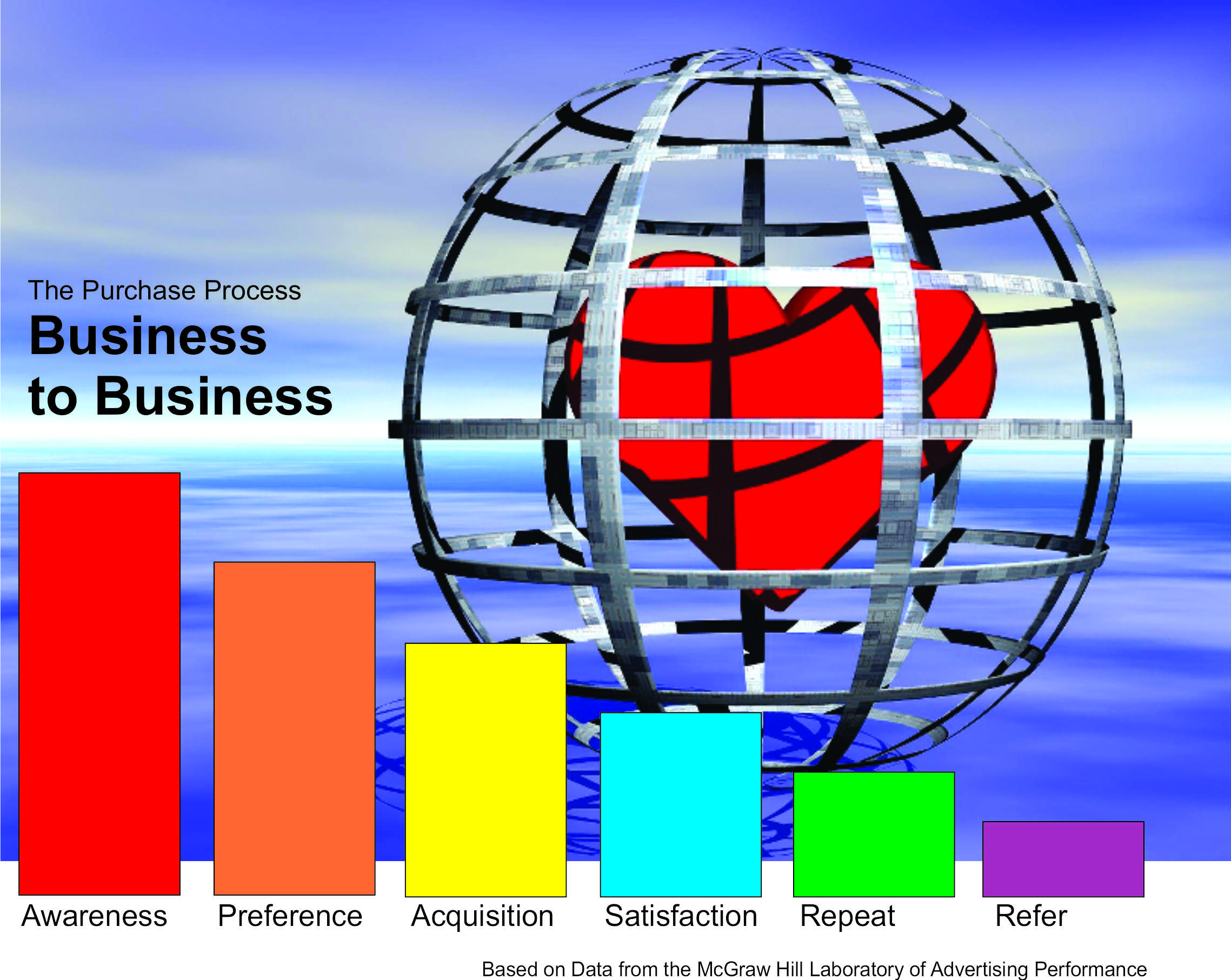
B2B Sales ProcessRick said, You mean like thinking that brand is more important than sales, right?”

“You’re right my direct marketing friend,” I responded. “That assumption is at the heart of so many expectations that people have of their marketing that are so wrong! Brand is something you have to allow to happen instead of trying to control it.

That’s why it is nearly impossible to put a number on it.

Rob, our southern-fried band guru arrived and jumped right in saying, “But you can measure it. You have to spend the money to learn the basic level of awareness and preference as well as sales to satisfy Rick and repeat to really nail it down.”

Jim, the lunch guest who had triggered my maunderings asked, “Can you explain that?”

Rob, who all of us call Bubba turned on his Georgia charm and said, “You betcha. Research folks believe you can figure out how powerful a brand y’all have by showing people your logo along with the competitions. Tha’s why lots of folks think a logo is a brand. Taint.

“The measures you can get that way break down like this:” he said indicating his points with raised fingers:

  1. Awareness—that’s the percentage of folks asked that can identify your “brand” and what it is all about from nothin’ more than your logotype.
  2. Preference—what share of the folks that can identify you and your competitors say they pick you first in a buying situation.
  3. Acquisition—that’s when it gets harder ‘cause you’re dealin’ with actual sales versus the competition but if you keep good records even ‘little guys’ can use this measure.
  4. Satisfaction comes next. Most marketer don’t want to admit that not everyone likes their product or service even when they buy and use it.
  5. Repeat— Another way to figure out where you really stand is lots easier in today’s on-line purchase world if you’re price, delivery included, is still the best easily available.
  6. Referral—is the final measure in reality. Y’all can get an idea about this by asking everyone that considers your product or service who told them about you.

Gail, the veteran advertising copy writer said, “If you run ads in national and sometimes regional magazines you can sometimes get Bubba’s first two from readership studies they do. B2B and B2C are pretty much the same except lower prices mean faster answers and acquisition is replaced with trial but it is pretty much the same game.”

“And,” I said, “the rule of thumb I learned long ago and far away is that the percentage drops by 20% each step of the way. In other words if 100 folks were aware than only 80 would Prefer my brand and then only 64 would actually buy. Of those, 51 would be satisfied 41 would buy again and of those just 33 would refer me.”

“Don’t forget,” Bubba said, just about nobody ever gets 100% awareness. Best ever I saw was barely north of 90%.

The Takeaway:

You can measure brand but generally only when it becomes a regional or nationally known product or service. A high awareness score is terrific but Preference, Acquisition (sales), Satisfaction, Repeat and Referral are always lower than Awareness. Always.

For the little guy, the better measure is found in knowing how your sales stack up against repeat and referral which you can easily develop from your B2B sales records

Jerry Fletcher’s blog recaps conversations with clients, prospects and the unruly mob of business development professionals he consorts with. They discuss marketing that works from solopreneur to enterprise level. Jerry Fletcher is the ringleader and “Watson” of the dialogue. Sign up for the blog and other publications at: www.JerryFletcher.com/Profit.html

Jerry has been researching and implementing small business marketing that builds businesses, careers and lives of joy for 25 years as President of Z-axis Marketing, Inc. Learn more at www.JerryFletcher.com

Schedule a personal appearance. Jerry speaks internationally on Networking, Marketing and Contact Relationship Magic. www.NetworkingNinja.com